We don't just develop apps; we engineer experiences, innovate
solutions, and redefine possibilities. With a legacy of over a
decade, our commitment to excellence, cutting-edge technologies,
and a talented team of professionals is what sets us apart.
Decreasing the size of distribution centers, the logistics industry used to be dominated by massive distribution centers. The change for this administration industry has changed drastically over the past decade due to the app developed by form best iOS app development company.
With the rise of technology, e-commerce has reduced the number of products that most distribution centers needed at any given time. Replacing them with virtual stores, the digital market has grown introducing a new type of distribution center. The warehouses are now small and easy to handle which makes them able to quickly move the product from the warehouse to the customer’s destination.
Helping the business to grow in the demand market you are now able to scale your products to manage all your deliveries. Being able to ensure the timely delivery of your products through a single software tool is how app development has helped the logistics industry bloom. You are now able to track your deliveries, schedule them and plan your own deliveries, so you can be ready for everything.
These are just a few advantages why so many businesses in the logistics industry are opting for a management solution to benefit their company. With custom-built software, they are now able to perfectly address the needs of their customers. The software provides improved communications, increased efficiency, easy-to-manage customer service, and increase responsiveness to customer demand which creates more effective workflows and optimizes the processes that support their business.
Now let’s take a look at the types of app solutions from the best iOS app development company for your company.
TYPES OF LOGISTICS APPS
What kind of apps are currently being built today, and how do they help professionals in the logistics industry? In this section, we have gathered some popular types of applications from the logistics industry.
1/ FLEET ROUTING APP
Fleet Routing App will help you determine the most efficient and cost-effective method for transporting goods. It can find routes that utilize resources efficiently and minimizes miles. Offering their own version of versions, the best iOS app development company provides a competitive app to change your business game forever, here is how:
Helps you Gain your drivers’ trust.
Provides effective solutions for drivers.
Pays attention to the driver’s input by optimizing routes accordingly.
Offers improved planned routes.
2/ SUPPLY CHAIN MANAGEMENT SOFTWARE
Supply Chain Management (SCM) software is a type of Enterprise Resource Planning (ERP) software intended to help your company manage supply chains. It is also designed to optimize the efficiency of moving goods from the warehouse to the customers’ location. Here are the benefits:
Provides you a centralized view of the people, processes, and systems in your operations.
Eliminates bottlenecks causing delays and speeds execution.
Allows you to monitor performances.
Cuts down your costs and manages external, internal, or both supply chains.
3/ ROUTE OPTIMIZATION APP
Route optimization App, as the name suggests will help your company deliver goods to customers with ease. This App will optimize routes by using real-time data extracted from GPS devices and suggests schedules for deliveries. Being new in the industry it is surprisingly growing with the benefits it offers here are some:
Faster delivery time
Minimizing shipping times
reducing idle waiting times,
decreasing gas consumption.
4/ REAL-TIME TRANSPORTATION MANAGEMENT SOFTWARE
A cloud-based solution to use the technology to help plan, execute, and optimize the tracking of vehicles and assets. This software has been adopted by a large number of companies in the United States due to the real-time solutions that it offers. It also helps with:
Reduction in cost for your business
Saves time and improves deliveries.
Improves customer satisfaction with real-time updates.
Woah, now that you have made it here, you deserve a reward. Gathered by our experts we have rounded up some features that you should ask for in your app.
FEATURES THAT LOGISTICS APPS SHOULD HAVE
Logistics apps must have a feature-rich app to lay the base of success for your business. These features should include:
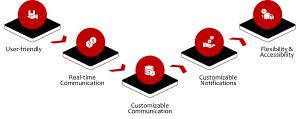
User-friendly
The app should have a user-friendly interface to give the user an unforgettable experience. With an intractable UI/UX, it will make it easy for people to use the app and get familiar with it.
Real-time Communication
Having real-time communication between drivers and dispatchers can create a positive impact on your customers. They will be able to track their product if the drivers are hours or minutes away from delivery or inform them if there is a delay. RTC provides instant communication which is helpful for the users as they do not have to wait for the response.
Customizable Communication
If there is a delay or the driver is unable to reach the delivery recipient, customizable communications provide them with several communication channels to reach out.
For example, drivers might call recipients or send them a text message.
Customizable Notifications
Depending on the usage and customer’s preference your app can have custom notifications. This can enable you to grab your user’s attention or update them with a new offer directly targeting their needs.
Flexibility & Accessibly
Your logistics app should be flexible and accessible. It should have several add-ons to reach the global industry.
BUILD A CUSTOM LOGISTIC APP WITH THE BEST IOS APP DEVELOPMENT COMPANY
TechnBrains is a full-service iOS app development company with an exceptional working experience with enterprise clients to build the solutions that they need. Whether you’re looking for applications to help you simplify your operations or more efficiently handle shipments, staff and inventory, and accounting, we can build the high-quality tools you need. To get your app developed by best, get in touch with us today.
Application Testing
Technology is advancing faster, and it is mandatory to have an impact through any web or app sources for promoting a brand. The development process is incomplete without adequate testing, as apps may have issues and pose severe security threats. Application testing involves testing an app for various capabilities, including compatibility, functionality, and security.
TechnBrains features an article on the differences between web and mobile app testing. Apps are the new front for many businesses. Therefore, we will discuss mobile application testing. There are many types of mobile application testing based on the purpose of testing. The following are the most common types.
Functional Testing
Interruption Testing
Speed Testing
Usability Testing
Performance Testing
Security Testing
We will discuss the types of application security testing and its process.
APPLICATION SECURITY TESTING
Companies prevent attacks on system data, user information, and functionality through application security testing. It refers to testing an app or website for redundancies, loopholes, and vulnerabilities that threaten the system. Web application security testing refers to finding security flaws in a webpage, while mobile app security testing ensures the security of a mobile app.
To test different app areas, professionals like TechnBrains use multiple tools and techniques after determining the suitable types of testing. The tools help in deriving bias-less results with higher accuracy. Security testing finally enables the improvement of all aspects of an app for strength.
TYPES OF APPLICATION SECURITY TESTING
1. Threat Analysis
The first step in testing is to analyze the threats external to the app. It involves testing the user credential information, app data, and interaction with third-party apps. The threats that an app faces can be of various natures. Creation of logs for security credentials, phishing crucial app data, and having malware in interfaces are all types of threats and need analysis for prevention.
2. Vulnerability Analysis
Sometimes, the app may behave differently due to bugs, issues, or malfunctions. It may also result from conflicting elements in hybrid apps. Vulnerability analysis helps track issues internal to the app and may arise from the code or app interfaces.
3. Ethical Hacking
The best way to prevent your app and data from hackers is to hire one – an ethical one. Ethical hackers think of innovative ways to gain access to app databases and instances for highlighting the weaknesses in an app. Businesses hire them to test their digital privacy and app security. They help in improving app security and contribute to preventing real hacking attempts.
4. Analyzing Permissions and Interfaces
Too many apps face vulnerabilities due to granting group permissions and interfaces with malware code. Both of these app areas need thorough analysis for security measures. App permissions requiring unnecessary access may need testing for vulnerabilities and loopholes. Likewise, interfaces that share information in an app might contain malware or data leaks that may harm data security.
5. Static Application Security Testing (SAST)
It involves reviewing and testing the code and structure of an app without executing the code. Static testing looks for app features, functions, and API vulnerabilities. Following standards in coding and using no-code or low-code environments may reduce such vulnerabilities in an app.
6. Dynamic Application Security Testing (DAST)
It tests the app’s security when running and in use. Dynamic testing focuses on access control, encryption of data, and the app’s defenses against issues or security attacks. Following the best practices in app interfaces and processes may lead to lesser weaknesses in an app.
The hybrid approach combines the benefits of SAST and DAST. It places an analytic tool that can analyze the code when the app is in production and checks the vital information when it runs. Interactive testing enables companies like TechnBrains to check the code, app processes, back-end connection, etc.
RASP is way more than a testing approach. It is a tool that checks the app’s security at run-time using its analytic and resolution mechanisms. It automatically terminates attacker sessions, saving the app from data theft and security concerns.
THE APPLICATION SECURITY TESTING PROCESS
1. Preparation
The first step is preparing for the test by defining the target audience and imitating realistic data to test different cases. Preparation also covers the questions on the testing environment, execution tools, and results that serve your testing objective.
2. Selection of Testing Types
It requires selecting the suitable types of testing that serve your testing objective. Combining testing types may bring versatile results but avoid randomness and align the security testing activity according to goals.
3. Test Cases
Defining test cases means preparing the events and procedures we want to examine. It helps in determining the probable user behavior in case of security risks. Factors like user demographics, variety of devices, operating system versions, etc., must be similar to the audience.
4. Test Environment
Imitating the test environment for matching with the real environment is crucial. It helps in inspecting the app’s behavior by counting in several factors. These factors include weaker networks, low battery, or ram consumption to imitate a real environment where the app must perform without compromising security.
5. Execution
Test cases and test environment are ready. Execute the testing activities and use measurable analytics to gather data at different intervals. This data will help obtain meaningful results and key insights into the app’s security level.
6. Analyze Results
Once you have the results, you can compare them to industry benchmarks and competitive assessments. Performance and security issues that need further development work must route to the development team. Hire the expertise of TechnBrains to improve the app to make up for the security results.
CONCLUSION
Application security testing is one of the many testing activities an app frequently requires. Security risks can become the biggest nightmare as they cause billions of losses annually across different industries. A company must lay out a proper security policy with guidelines on daily tasks and prepare orderly responses to security breaches. It must also hire proper security professionals.
TechnBrains has a remarkable experience in web and app development and a commitment to serving innovative, solid, and sustainable growth. Businesses can boost their growth potential by selecting the right types of testing and following the procedure employing best practices.
Supply Chain Management
The management of the flow of resources like raw materials and products is Supply Chain Management. It enables moving the goods, services, and finances necessary for manufacturing and selling products. Apart from the logistics, it also focuses on the quality of the raw materials and deals with post-sales services like compensating and resolving return issues.
TechnBrains provides solutions for efficiency in supply chain management. There are different supply chain models, and we will explain them for better understanding. We will also look into the stages of the supply chain management process to adhere to the customer needs in a better way by employing the right tools.
MODELS OF SUPPLY CHAIN MANAGEMENT
A business’s best course of action is integrating with the vendors and suppliers. You can read the benefits here, according to the TechnBrains admin. The model selection involves determining the needs of your business, the type of products you provide, and the geographic location of customers and vendors. The following are the models for supply chain management:
1. CONTINUOUS FLOW
The model serves businesses that offer products with regular but longer use. It involves minor details in each stage of the supply chain process with occasional changes in the set-out plan. Products like toothbrushes, paper diaries, and hair combs are some examples. They usually have the same buying patterns over the year without any surge in demand.
2. FAST CHAIN
FMCGs cater to their customers daily and need faster procurement, production, and delivery mechanisms so it stays available. Products having constant demand use this model for the supply chain. Swift management is necessary as such products face intense competition.
3. AGILE
The agile model deals with products that have many variations and diverse customer demands. It allows for addressing the details in each stage of the supply chain to meet customer needs. Dell uses the agile model for custom orders and lets customers choose suitable components. The process calls for careful procurement, cautious assembly, and accurate delivery, so customers get what they need.
4. FLEXIBLE
Seasonal cycles and events cause periodic changes in demand, needing a flexible supply chain model. One example is Christmas and Easter products that see a sky-rocketing demand and fade afterward. Products like warm jackets and sunscreens need flexibility in production and delivery processes to cater to seasonal demands. Hiring additional resources during high demands is inevitable.
5. CUSTOM
Most fashion and high-tech products require rapid upgrades and improvements. Older products may lose relevance and demand over time. Designer dresses use materials like motifs and beadings. Likewise, tech products such as wearables and gaming consoles have rapid advancements. The custom model deals with all such products and allows frequent changes in vendors, production processes, etc.
Most of the solutions we find in the app and software market provide Continuous, Fast chain, and Agile models for supply chain management. If your company is following the Custom or Flexible model, we recommend a custom solution to cope with the changes in vendors, product components, and the location of customers. TechnBrains has the expertise to develop the right solution for your supply chain.
STAGES IN SUPPLY CHAIN MANAGEMENT PROCESS
1. PLANNING
An efficient supply chain strategy formulates in the planning stage. It involves necessary planning relative to each stage to set guidelines. Planning the resourcing, manufacturing, and delivering mechanisms allows you to manage the supply chain. Write-ups with details regarding each step are vital as you will review your plan each time you get stuck in policy matters.
2. SOURCING
Procuring quality raw materials is essential for a business and involves multiple checks. Comparison in quotations lets you choose a suitable vendor to assist your business. The sourcing process also entails warehousing and transportation systems while minimizing costs at each level without impacting quality.
3. MANUFACTURING
It is necessary to think of production as a transformation process that adds value to raw materials to enhance the consumer experience. Supply chain services aid in resourcing materials during manufacturing. It also deals with the stock levels of raw materials and final goods to align them with the demand. Quality assurance for final goods is as important as the raw materials.
4. DELIVERY
Different systems help move the products to client destinations. Delivering involves using traditional channels of transport and modern means of tracking and payments. Supply chain management deals with all delivery tasks for improvements in the overall process. Choosing the proper channels and timely product delivery can help build profitable customer relationships.
5. RETURN
The post-sale services are an integral part of any business. Managing and compensating returns is a practice that enhances the trust level of consumers. It is also very professional to deal with the complaints in product and its delivery and eliminate the causes of such problems. Improvement helps a brand reach the highest levels of customer loyalty.
CONCLUSION
Selecting a suitable management model accelerates growth in many ways. Modern business practices require a customer-centric approach in every business area. The Just-in-time and assemble-on-demand methods help you improve your supply chain by optimizing time and resource usage. Improving the tasks in each supply chain stage will help achieve excellence.
It is necessary to evaluate the supply chain management process on the basis of the following criteria:
Measuring Efficiency
Quality Assurance
Cost Reduction
Resource Optimization
Customer Satisfaction
Mobile apps have become a very important part of our daily lives. From shopping our favorites to making valuable transactions, mobile apps have proved to make our lives easier and more accessible. There seems to be an app for everyone and everything.
Building a mobile app is not an easy task to execute. It requires a lot of planning, design, development, and testing to create a successful mobile app. This is where mobile app developers come to the rescue.
5 REASONS HOW MOBILE APP DEVELOPERS CAN ATTRACT SUCCESS FOR YOU
Through our expert analysis, we have gathered the top five reasons why hiring a skilled mobile app developer can bring success to your project. Let’s get into it.
1. Experience and Expertise
Mobile app development is a complex process that requires specialized skills and expertise. Our professional mobile app developer has the knowledge and experience to develop high-quality mobile apps that meet the needs of your target audience.
They are aware of the latest trends and technologies in the mobile app development industry, which allows them to create innovative and user-friendly apps. By hiring an experienced mobile app developer, you can be assured that your project is in safe hands.
2. Faster Time-to-Market
Mobile app developers understand the importance of time-to-market. They know that launching your app as quickly as possible can give you a competitive edge. At TechnBrains, our expert developers can help you speed up the development process by using agile development methodologies, which allows them to deliver a working prototype of your app quickly.
They can help you identify and prioritize the features that are essential for your app’s success, which can help you launch your app faster.
3. Cost-Effective Solution
The main advantage of hiring TechnBrains is that it is proven to be cost-effective. While it may seem expensive to hire a professional one, it can save you a lot of money in the long run.
We can help you save your assets and ensure that your app is built to the highest standards. They can help you optimize your app for performance, which can reduce your hosting and maintenance costs.
4. Seamless User Experience
Our app developers understand the importance of providing a seamless user experience. They know that a great user experience can increase user engagement and retention.
We can help you create an intuitive and user-friendly app that meets the needs of your target audience. This will boost your app for different devices and platforms, which can provide a consistent user experience across all devices.
5. Technical Support and Maintenance
TechnBrains can provide technical support and maintenance for your app. We can help you fix any bugs or issues that arise after the launch of your app and update your app with new features and functionalities.
By hiring TechnBrains for your app needs, you can ensure that your app remains up-to-date and relevant for years to come.
TECHNBRAINS LEGIT MEANS SUCCESS
Now that you have made it here, here are some 3 rewards excusably for you on how TechnBrains can ensure your app’s success.
· Customization and Flexibility
A capable mobile app developer should be able to provide customized solutions that meet the unique needs of your business. We can help you identify and prioritize the features that will result in your app’s success and customize your app accordingly.
Our tech-savvy developers are flexible in terms of app updates and changes so that you stay ahead of the competition.
· Market Research and Analysis
App developers conduct market research and analysis to identify opportunities and challenges in your target market. Our developers understand user behavior and preferences and use them to identify competitors and trends.
All of this is fueled to develop a competitive strategy that helps you stand out from the crowd. By conducting thorough market research and analysis, you can ensure that your app meets the needs of your target audience.
· Security and Compliance
TechnBrains considers security in app development is the top priority. We know how to build secure and compliant apps that protect user data with industry standards and regulations. Security features like data encryption, authentication, and authorization, which can prevent data breaches are built to ensure that your app meets regulatory requirements.
TECHNBRAINS IS THE ANSWER
All things considered, finding professional mobile app developers is critical to the success of your mobile app project. At TechnBrains we have experienced mobile app developers that have all the creativity, attention to detail, and passion for their work to assist you on your path to success.
We can create a user-friendly and functional app just for you that meets your requirements and enhances the user experience. With TechnBrains and a clear vision, you can create a mobile app that adds value to your business.
Introduction to Machine Learning
Machine learning refers to the ability of a program to collect and use data following some validation parameters to improve task performance. It includes refining the quality of tasks while improving accuracy and reducing performance time. The back-end code and algorithms allow machine learning to trace, communicate and exchange information necessary for task completion.
Artificial intelligence uses machine learning, but all machine learning is not limited to AI. An Android or iOS mobile app developer needs to understand the role of platforms in deployment and the techniques to optimize the model performance for deployment. We will also discuss the common deployment strategies and best practices to add value to a machine learning deployment project.
PLATFORMS FOR MACHINE LEARNING DEPLOYMENT
Various deployment platforms provide a variety of features to deploy and manage machine learning models. It is essential to analyze the level of control to customize your environment. The pricing strategy of platforms differs, with some charging flexibly while others offer subscriptions or upfront payments.
Selecting the right platform depends upon the deployment needs and budget of the ML Engineers and the requests of an Android or iOS mobile app developer. Developers use machine learning to improve speech recognition, behavioral analysis, and predictive study. Here is a list of different platforms.
SaturnCloud
Anaconda
Azure Machine Learning by Microsoft
AWS by Amazon SageMaker
Colab by Google Research
TECHNIQUES FOR PERFORMANCE OPTIMIZATION
After a suitable platform selection, ML engineers and data scientists must optimize the model for production and testing scenarios. The steps in optimization are as follows.
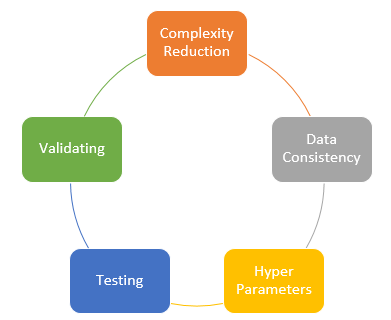
1. COMPLEXITY REDUCTION
The complexity of the models makes them slower and causes resource consumption to rise in deployment. Model architecture simplification enables improvements in performance while reducing the number of parameters helps reduce deployment time.
2. DATA CONSISTENCY
The consistency in data calls for removing exceptions and missing values from your data before using it. Make sure that the data is high quality and reliable, as it allows your model to perform consistently.
3. HYPERPARAMETERS
The hyperparameters hold values that control the learning behavior of a model. The number of neurons, activation function, optimizer, learning rate, etc., need tuning to help in reducing the deployment time and improve model performance.
4. TEST AND VALIDATE
Test and validate your model’s performance in a test environment that imitates production. It helps in the identification of issues and resolving them so deployment on production commences adequately.
DEPLOYMENT STRATEGIES
The selection of the deployment strategy is another essential task after optimizing the deployment model. It demands selection from the following strategies:
API BASED DEPLOYMENT
Applications requiring real time predictions use an API-based deployment strategy. It deploys the machine learning model as a web service and uses an API to access the model hence getting its name.
CONTAINER-BASED DEPLOYMENT
Large-scale deployments and on-premises applications use a container-based deployment strategy. Containerization bundles the machine learning model and its dependencies into light containers to deploy in different environments.
SERVERLESS DEPLOYMENT
Using the cloud functions on different platforms, machine learning models sometimes get deployed without using any servers. An android or iOS mobile app developer might use serverless deployment strategies as these are low-cost, flexible, and scalable.
BEST PRACTICES FOR DEPLOYMENT
You may need to benchmark your deployment process according to industry standards. Using any strategy for deployment, following the best practices guarantees a fluent deployment. The following are the best practices.
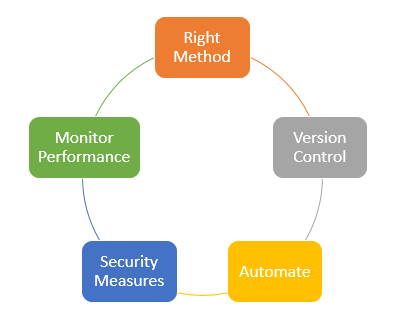
1. SELECT THE RIGHT METHOD
The model selection for deployment doesn’t depend on the preference; rather, it depends on the needs and objectives of the deployment. Extensive and deep learning algorithms are heavier and diverse, so ML engineers and data scientists can use cloud-based deployment using Azure machine learning or Anaconda. In contrast, web developers use API-based deployments to create web services for prediction.
2. CONTAINERIZE ACCORDINGLY
Containers include the code, runtime, libraries, etc., to deploy anytime. It reduces the complexity of deployment and enables consistent deployment over different environments. An Android and iOS mobile app developer may use similar machine learning packages for different app development needs, so containerizing is best for them.
3. VERSION CONTROL
Tracking changes in code and models is difficult and frustrating. Maintaining versions helps maintain change records while enabling a data scientist or an Android and iOS mobile app developer to roll back to prior versions if necessary.
4. AUTOMATION
Deployment automation reduces the need to repeat the same steps every time. It also reduces errors occurring due to human mistakes. We can also schedule certain deployments for software that needs machine learning deployments regularly. It helps in speeding up the machine-learning pipeline.
5. SECURITY MEASURES
Like any other data set, machine learning models also face security threats. Best practices include encrypting the models and requesting authentication to secure valuable data.
6. MONITOR PERFORMANCE
Monitoring the performance of machine learning models is vital to identify and removing issues. Continuous monitoring enables timely resolution for improving the models’ accuracy and reliability. It requires tracking and analyzing the following aspects of a model.
Prediction Accuracy
Precision and Recall
F1 Score
Data Drift
Latency and Throughput
CONCLUSION
Machine learning deployment is crucial to a machine learning development process. The worthiness and fluency of your models determine their accuracy and reliability. Performance optimization helps you in speeding up the process of deployment. The techniques for optimizing performance include complexity reduction, data consistency, hyperparameters, testing, and validating on clone instances.
Deployment strategies to select are API, Container, or cloud-based (Serverless), and you may select the one that fits your needs. At the same time, the best practices enable execution and monitoring for controlling the deployment models for machine learning. Lastly, the tools available for model performance monitoring ensure the reliability and accuracy of the model consistently.
The Birth of Android
Yes, you heard it right, Google did not design android. Android Inc. began in 2003 as a project of American technology. It was a team of 8 people working together to make something big. To acquire an investment, Andy Rubin, the founder of Android in 2005, had a meeting with Larry Page the co-founder of Google.
The team of 8 just did not manage to convince Google, they also were able to the right decision to sell Android to google for around $50 million at that time. Google promoted android to launch it as a giant in the industry and Now, Android development services are all that we know.
GOOGLE LAUNCHED ANDROID IN 2007
In November 2007, Google confidently launched the operating system that changed the world, Android. As it was first created for digital cameras, Google recognized its potential of it and decided to include it in smartphones. Android proved to be successful in smartphones with its user-friendly feature-rich nature. Google considered it to be a ground-breaking move in the history of Smartphones.
DIGITAL CAMERAS ONLY
Android that we use in smartphones was created as a platform for digital cameras. Realizing its potential, google later changed it to use it for the revolution of Smartphones. It was broadly accepted and effectively available.
HTC DREAM – FIRST ANDROID SMARTPHONE
Using Linux-based OS by google, the HTC dream was the first smartphone to ship with android. It had Android Version 1.0 with an upgrade to 1.6. it integrated and provided many apps for various Google services like Google Maps, Gmail, and many more.
ANDROID HAS MORE THAN 3 BILLION ACTIVE USERS
Android maintained its leading position in the tech market with a share close to 71.8 percent. It also controls a vast number of mobile devices in more than 190 nations from all over the globe. It has proved to be still growing in popularity with the number of users increasing every day and Android releasing innovative user-centric updates.
ANDROID VERSION NAMES
Android has a history of constantly upgrading by releasing versions named after sweet treats or desserts. The reason behind this is still unknown but till then you can enjoy the versions with your favorite treats.
ANDROID NAMING ORDER
This incredible fact about android is what we can bet on that you haven’t noticed. Android versions have been following a chronological order for their versions. Here is a list below:
A for Astro (1.0)
B for Bender (1.1)
C for Cupcake (1.5)
D for Donut (1.6)
E for Eclair (2.0)
F for Froyo (2.2)
G for Gingerbread (2.3)
H for Honeycomb (3)
I for Ice Cream Sandwich (4.0)
J for Jelly Bean (4.3)
K for KitKat (4.4)
L for Lollipop (5.0)
M for Marshmallow (6.0)
N for Nougat (7.0)
O for Oreo (8.0)
P for Pie (9.0)
Do you have a sweet treat starting with the letter Q?
THE GREEN GUY
Before the launch of the f=green guy, there were bots which were named Dandriod. The logo was created by Dan Morrill, who was asked to make something that is attractive and serves as the “eye candy” for the market. The logo that all of us call Android, is not called Android. Google unofficially calls him Bugdriod. Android means a human with a male robot appearance.
ANDROID IS OPEN TO ALL
As we already know, Android is open source. For better experiences, and more grasp on the code for the developers, Google has kept android open source to make it available for developers and businesses. This also gives a sense of innovation and provides accountability to restrict and control the work of others.
Another great thing about Android is that it provides greater access to information and opportunities that help people all around the globe to develop for the world with liberty.
GOOGLE CASHES OUT ANDROID.
Being an open-source platform, Google still generates a good chunk of revenue from Android. It opens room for all kinds of creativity, and innovation and provides diversity which favors Google. Through in-app- purchases, premium versions, and ads, Android is a source of generating revenue. As android is not only limited to smartphones, it is greatly used in wearables, and smart devices like fridges, TVs, and much more.
PHANDROID
A website that includes everything about android is a website called Phandriod. You can new trends, forums, and news about android there. It was the official website for android when google announced it in 2007.
CUSTOMIZATION
The access to make changes that meets your needs is something that made android popular. There are now dozens of ways how you can make the android look and feel like yours. Matching everything to your taste, android is user-centric and has a loyal customer base.
ALL THINGS CONSIDERED
There are many more things about Android that cannot be explained in a single post. From being a team of 8 to now having over 3 billion users, Android has proved his spot. Just in case you are looking for Android Development Services make sure to connect with us to turn your idea into reality.
Project Management
The role of a project manager is crucial to project completion. Project Management involves planning to use all resources available to achieve a particular objective in time. It focuses on the optimal use of resources in each project phase to meet the project scope.
In software development, a project manager is a focal point between stakeholders and the development team. It is essential to meet the needs of all stakeholders in the project and align each step in the development process with the final objective.
Ensuring quality in a project is crucial, especially in custom software development. Therefore, efficient project management is necessary to attain the objectives in time. Let’s explore the stages and types of project management for a smooth development process.
THE FIVE STAGES OF SOFTWARE PROJECT MANAGEMENT
The stages involved in project management can occur once in smaller projects. For bigger software projects, break the project into phases and follow these stages in each phase. The five stages are:
1. INITIATION
Preparing a complete feasibility report and highlighting a project’s objectives is vital. Initiation lets you list the expectations from a client and the development team’s capacity to assist as a bridge to accomplish the software development. It includes documenting the following key aspects in the Project Charter:
Stakeholders
Requirements
Project Resources
Project Timeline
Project Phases
Project Risks
Effective use of resources demands listing every aspect before planning and mapping them against the requirements. Custom software development sometimes involves large developments with multiple phases as mini-projects. It is also essential to list phases and specify a timeline for each phase to complete the overall project before the deadline. Risk assessment allows you to adopt mitigation techniques.
2. PLANNING
Once you have the details of all the aspects, the next thing is to break the objective into achievable goals and map those goals with timelines. You also involve all stakeholders in each planning session to decide the requirements and responsibilities in each project stage. Ask certain questions to chart the scheduling of each task, such as:
What information do you need?
Who is responsible?
What resources do you require?
How much time does it take?
What is the Scope of the Project?
What are the Risks Involved?
How to mitigate the Risks?
The second most important thing is to list the resource requirement for tasks. It lets you manage resources better and begin work on multiple phases. However, the approach to start two or more phases is only for custom software development projects to optimize resource usage. The four resource allocation methods, according to The Digital Project Manager, are:
Critical Path Method
Critical Chain Method
Resource Leveling
3. EXECUTION
The execution of a project needs some aligning and mediating from the project management with more focus on time and resource constraints. While mediating collaboration among team members to complete tasks assigned to individuals. It helps to implement the planned responsibilities and achieve project or phase goals without delay.
In custom software development, the execution phase may take longer as it has extensive coding and database development. The development team in such scenarios is usually divided into two groups. Front-end developers are responsible for user interfaces like forms, reports, and display design elements. Back-end developers are responsible for database design, APIs, linkages, and workflows.
4. MONITORING AND CONTROLLING
The most important project management stage is monitoring and controlling the outcome. It also deals with the removal of any bugs in the software. However, monitoring and controlling were a part of the implementation. But think of it as overlapping some of the execution and closure stages.
The main job at this stage is to evaluate the software on the objective and goals set out for development. You can find and fix the redundancies in the software and project goals at this stage. By aligning the tasks in execution, you can achieve those objectives.
5. CLOSURE
The project needs proper closure by the project management. It involves handing over the software to the client while providing training to users if necessary. You then proceed to test runs and live runs of the software to eliminate any chances of errors. Each step in the closure stage needs documentation with sign-offs and acceptances from all stakeholders.
The development team also holds closure meetings to discuss the interruptions in the project phases or tasks and plan better techniques for improvements in future projects. Project managers are responsible for preparing a complete report that covers the entire software project. Sometimes they also suggest further improvements or extensions for better organizational operations.
TYPES OF PROJECT MANAGEMENT
There are many types of project management techniques based on the nature of the project. Some examples are construction projects, rehabilitation projects, education projects, etc. However, we will discuss the types that are relative to software development.
WATERFALL
The traditional approach requires the completion of one task before starting another. In such a format, task performance is linear, and a lack of flexibility can create difficulties for later phases. Bug removal and missing a timeline in one task can delay the whole project.
AGILE
Agile project management uses a collective approach. Different phases of a project are started simultaneously by grouping resources in teams. Teams perform assigned tasks and remove issues in each task to complete the project on time.
SPIRAL
The spiral project management combines both waterfall and agile methods for continual upgrading. The base of the spiral indicates the start of a project, and it keeps growing spirals that pass through the four development stages hence giving it the name.
LEAN
It took inspiration from Japanese techniques of Just-in-time and Assembled-on-deck. Project management through the Lean model reduces waste by using fewer resources for maximum product value. You can use the Lean method to improve consistency in the project.
Businesses and startups often find it hard and struggle to choose the best mobile app development company. The reason this decision is crucial is that when you are going for custom software development, you need to make sure that your vision of an app aligns with the vision of the developing team.
We understand the importance of your unique custom idea and the need for it to be developed by the right Custom Software Development Company. By choosing the best, you are guaranteed to have an exceptional final product.
Cost, experience, and portfolio are still important to consider when selecting the best mobile app developers, but there are some key points that you should also consider before making the final choice.
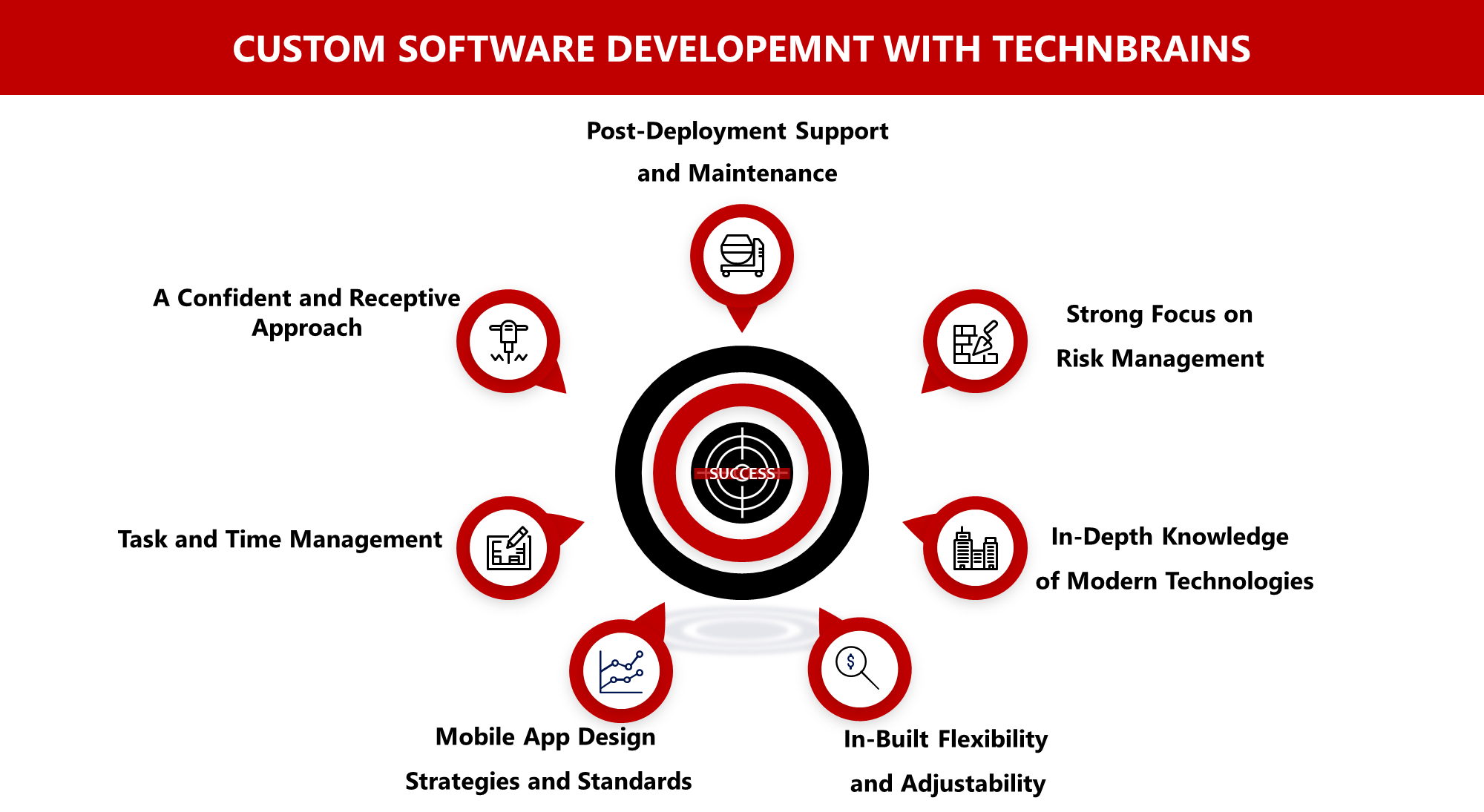
Here are the 7 signs, that are essential for choosing a custom software development company for your mobile app:
A CONFIDENT AND RECEPTIVE APPROACH
The success of your product depends upon the development company. The company you choose should have a positive outlook for your project. They should be ready to go the extra mile to develop the best possible solution they have.
Look at the process of their app development, and get in touch with their professional team to have an insight into what you are going to deal with. Take into account their quick responses to you and the interest of the developer in your project.
TASK AND TIME MANAGEMENT
A company that has professional developers is reliable due to the commitment they have to their work. They are trained and skilled by the company to complete their task in the best way possible. They have calculated each step of the process and make sure they follow the process.
A good app development company is excellent at managing its teams or clients. You should go for a company that has free consultation so you can have an idea about the approach you have certainly faced times when you had to make a difficult choice to remove someone from the team and try someone else to get tasks done. At TechnBrains, we regularly check on our clients to make sure everyone is on the same page and provide free expert consultations. Try now!
MOBILE APP DESIGN STRATEGIES AND STANDARDS
We understand the importance of an attractive user interface. Go for a company that can build an exceptional UI/UX for your app to attract users in the future. Make sure to look for developers in a company that has a creative set of developers that make exceptional patterns rather than going for a pre-defined set of patterns. Our creative app developers have patterns that are diversified to fit your needs.
Besides all of this, the app design will set or damage your brand’s reputation. An interactive UI/UX will result in building a loyal customer base. Hence look for experience in a company that has innovative app designers who know how to make an appealing design that stands out among the target audience.
IN-BUILT FLEXIBILITY AND ADJUSTABILITY
Two of the most vital qualities of mobile app development services are flexibility and adaptability. Experienced app developers know that company requirements may change at any time and that they may have to cope with unexpected issues because the process of developing mobile apps can be unpredictable.
To fulfill the needs of the business, custom app developers must modify the technology and re-engineer procedures. Also, they should always be looking for proactive ways to improve situations.
IN-DEPTH KNOWLEDGE OF MODERN TECHNOLOGIES
Custom mobile application development companies that have experience with a variety of technologies and are working with the most appropriate ones for your project. Hiring an app developer with experience working with the technology you need is a smart move.
Also consider a company that follows good coding best practices to produce clean, understandable code. They can quickly generate the best solutions through their extensive industry knowledge with their intellectual abilities.
A STRONG FOCUS ON RISK MANAGEMENT
Changes are bound to happen; things tend to get overwhelming when you are in the process of building a custom app. Look for a team that has excellent risk management to ensure your app is developed smoothly. A non-disclosure agreement (NDA) should be provided by the company which indicates that the software house can manage risks. They need to provide safety buffers, identify any security concerns, and ensure the confidentiality of your project.
POST-DEPLOYMENT SUPPORT AND MAINTENANCE
Post-launch support is an essential quality of a competent mobile application company. A good company is not only devoted to making an exceptional app for you it also focuses on post-deployment support and maintenance services. Look for a company that treats their customers as partners and takes care of the app even though it is well-designed, well test, and user-oriented. Additionally, they should provide upgrades and enhancements related to the latest market trends so your app can stay competitive.
TECHNBRAINS AS YOUR CUSTOM SOFTWARE DEVELOPMENT COMPANY
As discussed above, TechnBrains is equipped with the latest market trends and professional developers to turn your idea into life. We have an incomparable combination of soft skills and technical capabilities that you are looking for in your custom app development.
Having said that, our developers at TechnBrains are proficient in both. While their industry-leading technical skills ensure a seamless development lifecycle of your mobile app, the quality of the end product is often a result of how well our development team works together. So what are you waiting for get a quote now!
Gardening Activities in the US
Facts and Figures
Awareness about environmental issues calls for a change in lifestyle for sustainable eating and reducing the carbon footprint. Some of the best ways to counter global pollution are recycling, water preservation, wildlife protection, and gardening. Gardening is a hobby most people like, while others enjoy the beauty of gardens.
According to Gardenpals, 55% of households in the US engage in gardening activities, of which 35% grow fruits, vegetables, and other edibles. The citizens spend a whopping $ 48 billion on lawn and gardening equipment. Millennials are also gaining interest in it using advanced apps developed by any iOS App Development Company.
BENEFITS OF GARDENING
Gardening has many benefits, including those to nature and the planet, but we will list the benefits to the people involved in it for keeping it compact. Such benefits include:
1. VITAMIN D
Gardening is the Best outdoor activity for sunlight exposure for immunity strength through Vitamin D.
2. REDUCES RISK OF DEMENTIA
Gardening activity helps reduce the risk of dementia by 36%, as studies suggest.
3. INVOLVES EXERCISES
It involves body and muscle movements serving as an exercise routine.
4. HANDLES LONELINESS
Loneliness is the major cause of depression in the US, and being busy helps you cope.
5. HEART AND GUT PROTECTION
Your activities help burn calories and protect you against heart diseases. By keeping yourself physically active, you also improve your digestive system preventing different illnesses.
6. STRESS MANAGEMENT
It helps to keep you busy, as the best stress management tactic is to avoid thoughts that cause stress.
7. HEALTHY EATING HABITS
When you grow your own food, you want to enjoy your yield, thus promoting healthy eating habits.
IPHONE APPS FOR GARDENING
We will review some of the best iPhone gardening apps available to keep you and your garden healthy. The following apps allow you to identify and sow plants, care for them, and get rewards such as flowers, fruits, and vegetables. Visit the AppStore to download gardening apps.
1. HOME OUTSIDE
Among many other apps for planning your lawns and gardens, Home Outside offers a better graphic view of the area with sample designs available. It lets you select, drag, rotate, and resize items to plan better aesthetics. It also allows you to select your exact location from Google Maps for precise measurements and shows the north compass for sunlight and wind direction in planning your garden space.
2. PLANTIN
A wonderful app developed by an iOS app development company to identify and care for different plant types. It provides information regarding the plant using the camera for scanning and AI algorithms to determine the health and provide a medical guidelines for plants. It offers features such as:
Watering Calculator
Light Meter
Care Plans
Care Notifications
Botanist Help
3. SMART PLANT & TREE CARE
It is an excellent gardening app with solutions regarding plant care. With a team of professionals who guide you through the steps involved in gardening, it helps prevent your garden from weeds, pests, and diseases. The app offers the products you need in your gardens and creates care calendars for plants so you can take better care of your lovely plants.
4. WATERME
The amazing app sets reminders about care routines like watering, trimming, and fertilizing frequencies of plants in your garden and notifies you daily about which plant needs which activity. It reduces the hectic task of checking each plant for caretaking. You can drag and drop notifications when once you are done. It lets you set time for notifications and syncs with other devices via iCloud.
5. URBAN VEGGIE GARDEN
The app focuses on urban gardening and enables using small spaces like balconies. The most amazing feature is video tutorials for ideas and the process of planting vegetables. It has an amazing community that quickly responds to any questions you ask on the app. It has the best mix of features an iOS App Development Company can provide in an app.
6. SEED TO SPOON
It is a fantastic app for growing your own food and lets you grow herbs, vegetables, fruits, and spices in your backyards or terraces. The app also provides a planting schedule to maximize your crop by highlighting the correct months for sowing seeds. It uses an advanced Growbot that finds answers to your questions rapidly with details regarding each step involved in Gardening.
THE NEED FOR URBAN GARDENING
The love of plantation rests within human nature for centuries. We all love flowers, except those with allergies indeed. Our connection with the forest and plants has dimmed with time, but we all enjoy green landscapes, wildlife, and forests. The need to keep this planet green has grown over the past decades, and we can all play our role in reviving nature.
In the US, over 34 million people, including around 12% of children, face hunger. Corporations and commercial farmers own all the farms that produce edible crops. By growing food in our home gardens, we can provide for those who can’t afford even the cheapest veggies. Through urban gardening, we may also be able to produce and share food throughout our communities to fight the hunger problem. An iOS App Development Company can only develop apps for assistance, but we must plan a better future.