Build and Scale Faster
150+ products shipped for startups and enterprises by engineers focused on real outcomes.
"Their ability to quickly understand an unfamiliar use case and respond creatively to it is impressive."

Anonymous
Executive, Pured Disc Golf

"TechnBrains resolved challenges efficiently and turned my vision into a solid, functional product with a strong foundation."

Jalen Gibbs
Founder, STREAMLINE LIVE
"The talent they provided was solid, but more importantly, they were quick to align with our way of working."

Nancy Snyder
Managing Director, MimeCast
Our trusted clients


Start Your Product Journey Today
Turn your idea into a working product. Share a few details and we'll help define the roadmap, timeline, and execution approach.
30+ Mobile App Ideas for Businesses in 2026
Discover 30+ mobile app ideas for businesses in 2026, from AI assistants and patient monitoring to fleet tracking and jobsite reports. Each idea shows real market demand, how hard it is to build, and how it makes money, so you can pick the right one for your business.


Updated Oct 19, 2026
Every successful business app started as one entry on a long list of app ideas, and the company behind it believed in it enough to build it. We want to help you find the idea that deserves that belief for your business.
The timing is on your side, because customers are rewarding exactly the kind of app worth building. Consumers spent a record $167 billion on in-app purchases in 2025, and for the first time non-game apps out-earned games. Downloads grew only 0.8% while spending grew 10.6%.
That gap is the opening for your business. People happily pay for the apps they rely on and rarely make room for new ones, so the bar is high, and we are confident you can clear it. Go through the list below, choose the idea that solves a problem your customers face every week, and commit to it fully. We show the demand behind each idea and how hard it is to build, so making that choice is easier than it looks.
Every idea below is backed by a linked 2025 or 2026 statistic and real user discussions from Reddit, Facebook and G2. We grouped them by category and added a build-complexity rating from our mobile app development team.
TL;DR: 30+ Mobile App Ideas for Businesses in 2026
| Category | Best for | Example ideas | Build complexity | Market demand |
| Breakout ideas | Founders looking past crowded categories | AI voice receptionist, caregiver coordination, trades apprenticeship matching | Moderate to High | High |
| AI apps | Teams buried in meetings, tickets and reports | Meeting-to-task assistant, support agent, report and memo generator | Moderate to High | High |
| Healthcare | Clinics, care agencies and digital health startups | Remote patient monitoring, therapist matching, home care scheduling | Moderate to High | High |
| Real estate and PropTech | Property owners, managers, agents and marketplaces | Property maintenance, listing marketplace, inspections | Moderate to High | Moderate |
| Logistics | Carriers, fleet operators and warehouses | Last-mile tracking, fleet maintenance, driver compliance | Moderate to High | High |
| Construction | General contractors, subcontractors and safety teams | Daily reports, equipment tracking, subcontractor scheduling | Moderate | High |
| SaaS and business operations | Service businesses and growing teams | Field service, onboarding, client portal | Low to Moderate | Moderate |
| Consumer and community | Niche audiences with a repeat habit | Fitness coaching, pet care, local events | Low to Moderate | Moderate |
Market demand reflects the size and growth of the need, based on the 2025 to 2026 data cited in each section.
What makes good app ideas worth building in 2026?
Good app ideas solve a problem people already pay to fix, in a workflow they repeat every week. Demand comes first: in CB Insights’ review of 431 shut-down startups, 43% failed on poor product-market fit, the top root cause. Running out of cash is usually where the story ends, not why.
Use four checks before you spend on a build:
- Proven demand. There is a public number, a paying incumbent, or both.
- A weaker version people already pay for. Your app wins by serving a narrower audience better.
- A reason to come back. Spending now follows apps people keep, so repeat use matters more than download spikes.
- A buildable first version. One core workflow a team can ship as a first release, then harden for real users. Platform choice and scope shape that first budget, so review the mobile app development cost drivers before you scope.
Every idea below passed these checks, and each one shows the demand number, why users stay, and how hard it is to build.
Which trending app ideas do most lists miss?
The strongest trending app ideas sit where a large, under-served group handles a daily problem with phone calls, group texts, or spreadsheets.
1. AI Voice Receptionist for Local Service Businesses
A phone agent that answers calls, books jobs, and texts confirmations for plumbers, clinics, and salons.
- Demand: 74% of consumers now expect customer service to be available 24/7.
- Why users return: Every answered call shows up as a booked job on the calendar.
- Build complexity: Moderate (telephony, calendar sync, human handoff).
2. Caregiver Coordination App for Families
One shared place for medications, appointments, and tasks for a parent or relative.
- Demand: 63 million Americans are family caregivers, up by about 20 million in a decade.
- Why users return: Care runs every day, and siblings stop chasing each other by text.
- Build complexity: Moderate (roles, reminders, health-data privacy).
3. Skilled Trades Apprenticeship Matching App
A marketplace that matches contractors with apprentices and certified tradespeople by skill, license, and location.
- Demand: 92% of construction firms report a hard time filling open positions.
- Why users return: Credentials and job history build a profile both sides reuse.
- Build complexity: Moderate (two-sided profiles, verification).
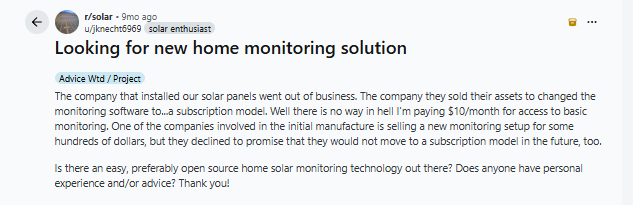
4. Home Energy and Solar Monitoring App
A cross-brand dashboard that checks panel output against the utility bill.
- Demand: The U.S. has passed more than 6.2 million solar installations.
- Why users return: Owners check production and savings every month.
- What users say: Many owners say on Reddit that manufacturer apps are poorly made or don’t match the utility bill.
- Build complexity: Moderate to High (inverter APIs, utility data).

What AI app ideas can businesses build now? (Agents, Assistants, Automation)
The AI app ideas worth building take one repetitive job off a team’s plate and keep a person in charge of the judgment. Consumers already pay for this category: generative AI in-app revenue nearly tripled to more than $5 billion in 2025. The business opportunity sits in narrower, workflow-specific tools.
5. AI Meeting-to-Task Assistant
Turns calls into owners, deadlines, and follow-ups inside the tools a team already uses.
- Demand: 57% of meetings are ad hoc calls with no calendar invite.
- Why users return: Action items stop getting lost in someone’s notes.
- Build complexity: Moderate (transcription, task integrations).
6. AI Customer Support Agent App
Resolves routine tickets and hands complex ones to a person with full context.
- Demand: Service teams say AI handles 30% of cases today and expect 50% by 2027.
- Why users return: Routine tickets close without waiting in a queue.
- Build complexity: Moderate to High (knowledge base, guardrails, escalation).
7. AI Report and Memo Generator
Drafts memos and reports from the data a team already works in, for review before sending.
- Demand: 80% of the workforce says they lack the time or energy to do their work.
- Why users return: The first draft is waiting when the analysis is done.
- Build complexity:
- Our build: TechnBrains is building Pencl, which uses Claude to turn in-product analysis into memos.
8. AI Sales Follow-Up Assistant
Drafts follow-ups, logs activity, and flags deals going cold.
- Demand: The average seller spends only 40% of their week selling.
- Why users return: Reps get selling hours back every week.
- Build complexity: Moderate (CRM sync, email and calendar access).
9. AI Personalized Learning Tutor
A tutor for one subject or certification that adapts to each learner’s gaps.
- Demand: The AI tutors market is projected to grow from $2.1 billion in 2025 to $17.7 billion by 2033.
- Why users return: Learners see visible progress toward an exam date.
- Build complexity: Pick a narrow niche, since general tutors are crowded.
Which healthcare apps have the clearest demand? (Patient Monitoring, Care, Mental Health)
Healthcare apps earn the most loyalty when they fit into reimbursed care or a daily routine, and they carry the heaviest build requirements. Apps that handle patient data for providers or health plans must be designed for HIPAA from the first sprint, and consumer health apps still fall under the FTC’s health breach rules. Health apps that read wearable data also need HealthKit on iPhone and Health Connect on Android, which adds real scope to the iOS app development cost and the Android build alike.
10. Remote Patient Monitoring App
Collects vitals from connected devices and alerts care teams when readings drift.
- Demand: Medicare paid more than $500 million for remote monitoring in 2024, covering nearly 1 million enrollees.
- Why users return: It is tied to a billable care program.
- Build complexity: High (device data, HIPAA, billing logs).
11. Medication Adherence App
Reminders, refill tracking, and caregiver alerts for people on several prescriptions.
- Demand: Americans received a record 210 billion days of medicine therapy in 2025, up 13% in five years.
- Why users return: Doses repeat every day, and a missed one reaches a family member.
- Build complexity: Moderate (reminders, pharmacy data, privacy).
12. Mental Health Therapist Matching App
Matches patients to licensed therapists by specialty, insurance, and availability.
- Demand: 40% of Americans, about 137 million people, live in a mental health professional shortage area.
- Why users return: Fit and insurance checks happen before the first session.
- Build complexity: High (credentialing, telehealth, HIPAA).
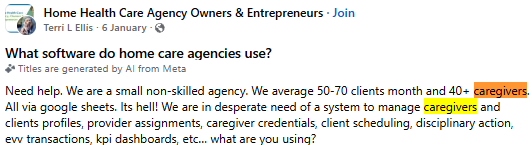
13. Senior Home Care Scheduling App
Shift scheduling, clock-ins, and visit notes for home care agencies.
- Demand: The direct care workforce is projected to add over 886,000 jobs from 2025 to 2035.
- Why users return: Agencies run payroll and coverage on it every week.
- What users say: Agency owners describe running 40-plus caregivers on spreadsheets.
- Build complexity: Moderate (scheduling, EVV, mobile check-ins).

Which real estate and PropTech apps are worth building?
Real estate apps keep users when they replace a messy handoff between owners, tenants, agents, and vendors. Two of the ideas below come from platforms our team has built. In both, the screens were the simple part. The work that made users rely on the product was the rules underneath: who can report, approve, or publish, and what happens when records conflict. That rules layer is also where most of the real estate app development cost goes.
14. Property Maintenance Management App
Tenants report issues by QR code, vendors diagnose, and owners approve before work starts.
- Demand: 56% of rental owners who use a property manager hire one for maintenance help.
- Why users return: Every request, approval, and completion report lives in one record.
- Build complexity: Moderate to High.
- Our build: We built this workflow for AMPD (Atlas Management), including roofing jobs.
15. Short-Term Rental Operations App
Schedules cleaners from booking calendars and confirms each turnover with photos.
- Demand: The average U.S. Airbnb cleaning fee reached $161.10 per stay in 2025.
- Why users return: A missed clean means a refund and a bad review.
- Build complexity: Moderate (calendar sync, cleaner app, photo proof).
16. Real Estate Listing Marketplace App
Connects owners, agents, buyers, and renters around verified listings.
- Demand: 52% of buyers found their home online, and 70% used a phone or tablet in the search.
- Why users return: Buyers return when listings are current and duplicates are gone.
- Build complexity:
- Our build: Our Roof360 build centered on listing trust: catching repeat submissions and controlling who can publish.
17. Property Inspection App
Guided checklists, photos, and instant reports for home, rental, and insurance inspections.
- Demand: Only 18% of buyers waived the inspection contingency in March 2026, so most deals still run through an inspection.
- Why users return: Inspectors reuse templates on every job.
- Build complexity: Moderate (offline mode, report generation).
Which logistics apps solve problems fleets pay for? (Delivery, Fleet, Warehouse)
Logistics apps stick when they cut a cost a carrier or shipper already tracks per mile, per parcel, or per order. Integrations drive most of the budget here: telematics, carrier APIs, and warehouse systems shape the logistics mobile app development cost more than screen count does.
18. Last-Mile Delivery Tracking App
Live tracking, delivery windows, and photo proof of delivery for local fleets and their customers.
- Demand:S. parcel volume reached 23.1 billion shipments in 2025, up 3.3%.
- Why users return: Customers make fewer “where is my order” calls on every route.
- Build complexity: Moderate to High (GPS, routing, customer notifications).
19. Fleet Maintenance Tracker
Service schedules, inspection logs, and repair history per truck for small and mid-size fleets.
- Demand: Truck repair and maintenance costs rose 6% in 2025 to about 21.5 cents per mile.
- Why users return: Every service event adds to a record fleets use to plan spend.
- Build complexity: Moderate (telematics data, alerts).
20. Warehouse Inventory Scanning App
Phone-based barcode scanning for receiving, picking, and cycle counts.
- Demand:S. e-commerce sales hit $340.2 billion in Q2 2026, 17.1% of all retail and up 12.2% year over year.
- Why users return: Staff scan with it on every shift.
- Build complexity: Moderate (offline sync, WMS or ERP integration).
21. Driver Compliance and Safety App
Hours-of-service logs, vehicle inspections, and safety checklists in one driver app.
- Demand: Transportation and material moving jobs recorded 1,391 fatal injuries in 2024, the most of any occupational group.
- Why users return: Regulated carriers must keep these records for every trip.
- Build complexity: High (ELD rules, audit trails).
Which construction apps do contractors use every day?
Construction apps win on the jobsite when they work offline, take seconds to fill in, and produce the record a GC or insurer asks for. These are some of the most approachable mobile app ideas on this list to build, and the daily habit is already there. The jobsite data these apps capture is also what feeds the AI tools covered in our construction data and AI statistics roundup.
22. Jobsite Daily Report App
Photo-based daily logs covering crews, weather, deliveries, and delays.
- Demand:S. construction spending ran at a $2.2 trillion annual rate in August 2026.
- Why users return: The GC needs the log every day, so it gets filled every day.
- Build complexity: Low to Moderate (offline mode, photo capture, PDF export).
23. Construction Equipment Tracking App
GPS location, hours, and service status for owned and rented machines.
- Demand: The American Rental Association forecasts U.S. construction and tool rental revenue at $83.5 billion in 2026.
- Why users return: Crews check it before every move and every rental return.
- What users say: Contractors report thieves finding wired trackers, so battery-backed units matter.
- Build complexity: Moderate (tracker hardware integration, geofencing).
24. Subcontractor Scheduling App
A shared crew calendar that shows each sub’s start dates, dependencies, and changes.
- Demand: 45% of construction firms report project delays from worker shortages, theirs or their subcontractors’.
- Why users return: Every schedule change reaches the right crew at once.
- Build complexity: Moderate (dependencies, notifications).
25. Jobsite Safety Inspection App
Time-stamped checklists, photos, and corrective actions with sign-off.
- Demand: Construction recorded 1,034 workplace deaths in 2024, the most of any private industry.
- Why users return: Inspections repeat on a schedule, and the records matter in an audit.
- Build complexity: Moderate (offline checklists, geo-tagging).
Which SaaS and business operations apps fit growing teams?
Operations apps keep users when they replace a spreadsheet the whole team already updates. Setup is the risk to design around: a tool that needs a dedicated admin to configure is hard for a small team to adopt. Device support is part of that setup: if your field or frontline staff work on company-issued Android devices, the Android app development cost depends largely on how many models and OS versions you have to support.
26. Field Service Management App
Job scheduling, dispatch, quotes, and invoices for HVAC, plumbing, and electrical crews.
- Demand: The U.S. field service management software industry is worth $3.1 billion in 2026.
- Why users return: Every job moves from booked to paid inside it.
- What users say: G2 reviewers name setup complexity as the main barrier for small crews.
- Build complexity: Moderate to High (dispatch, offline mode, payments).
27. Employee Onboarding App
Checklists, document collection, and buddy check-ins for new hires.
- Demand:S. employers made 5.2 million hires in August 2026 alone.
- Why users return: HR reruns the same flow for every new hire.
- Build complexity: Low to Moderate (templates, e-signature, HRIS sync).
28. Frontline Workforce Communication App
Shift updates, announcements, and quick forms for employees who never sit at a desk.
- Demand: Only 20% of employees worldwide were engaged in 2025.
- Why users return: Shifts, swaps, and pay updates arrive in one place.
- Build complexity: Moderate (push messaging, scheduling integration).
29. Client Portal for Service Businesses
A branded login where clients see status, files, approvals, and invoices.
- Demand: 81% of consumers want a conversation to continue without repeating themselves.
- Why users return: Clients check progress without emailing for an update.
- Build complexity: Low to Moderate (auth, file storage, roles).
Which consumer and community apps can still win?
Consumer apps compete for attention with the biggest platforms, so they win by going narrow: one audience, one habit, and a reason to open the app every week.
30. Niche Fitness Coaching App
Programs, check-ins, and progress tracking for one training style or audience.
- Demand: A record 81 million Americans belonged to a gym or fitness facility in 2025.
- Why users return: A coach reviews every logged session.
- Build complexity: Moderate (video, messaging, subscriptions).
31. Pet Care Services App
Booking for walkers, sitters, and groomers, with visit updates and pet records.
- Demand:S. pet industry spending reached $158 billion in 2025, across 95 million pet-owning households.
- Why users return: Walks and feedings repeat every day.
- What users say: Sitters say 20 to 40% platform cuts are pushing them to go independent.
- Build complexity: Moderate (two-sided booking, GPS walk tracking, payments).
32. Local Events and Community App
A neighborhood calendar with RSVPs, group chats, and local business listings.
- Demand: Only 26% of Americans say they know all or most of their neighbors.
- Why users return: Users get a weekly digest of what is happening nearby.
- Build complexity: Low to Moderate (events, moderation, notifications).
How do you take an app idea from validation to launch?
The fastest path to an app people keep is short: prove demand, ship one workflow, then harden what users have to trust before you scale.
- Validate demand in two to four weeks. Talk to 10 to 20 target users, test a landing page or clickable prototype, and confirm someone will pay.
- Scope one core workflow. The first release should do one job end to end, such as booking a job or logging a delivery. Everything else waits for usage data.
- Build the trust layer before launch. Auth, data access rules, payments, and compliance are where shortcuts cost the most. AI coding tools help with speed, but in Veracode’s 2025 study AI-generated code introduced security flaws in 45% of 80 coding tasks, so every build needs a human security review.
- Plan the store release early. Apple reviews every build against its App Review Guidelines and privacy rules, a step experienced iOS app development teams plan for from the first sprint.
- Measure repeat use, then expand. Weekly active use tells you more about the next feature than download counts do.
Not sure which of these ideas fits your market?
Our team can pressure-test your idea and scope a first release with you before you commit budget.
How much does it cost to build one of these app ideas?
Cost follows the build-complexity tag more than the idea itself. Four things move the number: how many workflows the first release covers, how many systems it connects to, whether it handles regulated data, and which platforms it ships on.

Low :The app covers one core workflow, with few integrations and no sensitive data.

Moderate:The app has two user roles or several integrations, such as calendars, payments, or telematics.

High:The app handles regulated data, device or ELD integrations, or a two-sided marketplace.
Ideas rated Low to Moderate or Moderate to High sit between two tiers, depending on how much the first release includes.
Platform choice adds its own line items. Android app development cost depends heavily on how many devices and OS versions you test against, while a cross-platform build shares one codebase across iOS and Android.
How do these mobile apps make money?
Most business apps on this list earn through subscriptions or a share of each transaction. Pick the model that matches how often users get value.
| Model | How it works | Fits ideas like |
| Per-seat or per-location subscription | Monthly fee per user, crew, or site | Field service, daily reports, onboarding, frontline communication |
| Usage-based pricing | Charge per call, ticket, or document processed | AI receptionist, support agent, memo generator |
| Marketplace commission | A cut of each booking or match | Pet care, therapist matching, trades matching, listing marketplace |
| Freemium with a paid tier | Free core use, paid automation or reports | Caregiver coordination, solar monitoring, local events |
| Reimbursed or program-funded | Revenue tied to a billable care program | Remote patient monitoring |
How does TechnBrains turn an app idea into a product people rely on?
We start with the one workflow that proves demand, then build the parts users have to trust: roles, data access rules, integrations, and compliance. That is how we approached AMPD’s maintenance approvals and Roof360’s listing verification, and it is how we build Pencl’s AI memo flow.
Since 2013, TechnBrains has shipped 150+ products across healthtech, PropTech, logistics, and construction, with HIPAA, SOC 2, and GDPR requirements built into the plan from the start. Our teams handle native and cross-platform builds, including Android app development for field crews and frontline staff who work on rugged or company-issued devices.
If one of these ideas matches a problem you already see in your business, or you have a prototype that needs to be ready for real users, we can review what to keep, what to rebuild, and what it takes to launch.
Are you weighing one of these ideas for your business, or holding a prototype that needs to be ready for real users?
Talk to us, and we will review what to keep, what to rebuild, and what it will take to launch your app.
Start Your Project
Table of Contents
Frequently Asked Questions
The best ones replace a phone, paper, or spreadsheet workflow the business already runs every week, such as booking, dispatch, client updates, or daily reports. Repeat use is what makes the app worth paying for.
Start with a Low or Low to Moderate idea from this list, such as a jobsite daily report app, an employee onboarding app, a client portal, or a local events app. Each covers one workflow with few integrations and no regulated data, so a first version ships quickly.
Non-game apps out-earned games in 2025. Among business apps, the clearest revenue comes from charging per seat, per location, or per transaction, because the value repeats every week.
Start where your users are. Check which devices your customers or staff already carry before choosing a platform. Compare iOS app development cost against Android for your scope, or ship one cross-platform codebase for both.
It depends on the build-complexity tag. A single-workflow app with few integrations can launch in weeks. Regulated, marketplace, or integration-heavy apps take longer because the trust layer has to be ready on day one.
Yes, for prototypes and demand tests. Before real users trust it with their data, have engineers review auth, data access rules, and payments.
Sign an NDA before sharing details, keep ownership of the code and accounts in your contract, and make sure you can access the repository from the first sprint.

Blocked by backlog or missing expertise?
Senior developers who build, fix, and ship — without slowing your team down.